If your power bill is high and your old electric cylinder is the reason, you are not alone. Most Auckland homes are still running electric resistance cylinders that heat water the same way a toaster heats bread, by pushing electricity through a wire until things get hot. It works, but it burns through power at a rate that shows up clearly on your bill every month.
A hot water heat pump does the same job at roughly a third of the running cost. This guide covers how they work, what installation involves, what you should budget, which brands are common in Auckland, and what to sort out before you book anyone to do the job.
What is a Hot Water Heat Pump and How Does It Work?
A hot water heat pump does not generate heat from electricity directly. It pulls heat from the air around it and moves that heat into a water storage cylinder. Because it is moving heat rather than creating it, the electricity demand is far lower than a conventional cylinder.
The cycle goes like this. The unit draws in outside air through an evaporator coil. A refrigerant inside that coil absorbs heat from the air and turns to gas. That gas gets compressed, which raises its temperature. The hot gas moves through a heat exchanger and passes its heat into the water sitting in the cylinder. The refrigerant cools back to liquid and the cycle repeats.
For every kilowatt of electricity the system uses, you get roughly three kilowatts of heat into your water. A standard electric cylinder gives you one kilowatt of heat per kilowatt of electricity. That gap is why the monthly running costs are so different.
Two system types are available in New Zealand. Integrated units have the heat pump and cylinder combined as one piece. They are simpler to install and suit most Auckland homes. Split systems separate the heat pump component from the cylinder, which works better in apartments or tight indoor spaces where you need the mechanical unit to sit outside. For a standard home with a garage or utility room, integrated is usually the practical choice.
Hot Water Heat Pump Costs in Auckland
Costs vary based on brand, cylinder size, and what the site needs. Supply and installation for a quality integrated unit generally sits between $3,500 and $7,500. Split systems start from around $4,500 and go up depending on how complex the install is. Larger cylinder sizes and premium brands sit at the higher end of those ranges.
The electrical connection is prescribed work under NZ law. A licensed electrician must carry out the wiring, connect the dedicated circuit, and issue a Certificate of Compliance on completion. If your switchboard is older or already running near capacity, a board upgrade may be needed before the heat pump can be connected safely. Your installer should flag this during a site visit.
Running costs for a standard electric cylinder in an Auckland home typically lands between $700 and $1,100 per year depending on household size and usage. A hot water heat pump covering the same load usually runs between $200 and $400 per year. Across ten years of ownership, that gap is several thousand dollars.
EECA Warmer Kiwi Homes: Can You Get a Subsidy?
EECA runs a programme called Warmer Kiwi Homes that provides funding for eligible homeowners to reduce the cost of energy-efficient upgrades, hot water heat pumps included. Eligibility is based on your home’s age, energy rating, and location, and whether you own the property. Homes built before 2000 without recent insulation upgrades tend to qualify.
The subsidy reduces your upfront cost but does not cover the full installation. Checking eligibility before committing to a purchase takes five minutes and could save you a meaningful amount. A good installer will be familiar with the process and can point you to the application.
Which Brands Should You Consider?
Several brands are actively sold and serviced in Auckland. Here is a straightforward summary of what each brings to the table.
Mitsubishi Electric is well established in the NZ heat pump market and their hot water units carry the same reputation for build quality. Service and parts availability across Auckland is strong, which matters when a unit needs attention five or ten years down the track.
Haier is a solid mid-range option. The units perform well for everyday household hot water demand, and the price point is lower than the Japanese brands. Parts are available in NZ without a long wait.
Sanden is a Japanese brand and a different proposition from the rest. Their units run on CO2 refrigerant (R744) rather than the synthetic refrigerants used by most competitors. CO2 refrigerant maintains efficiency better in colder temperatures, which suits Auckland winters. Sanden systems cost more upfront but the running cost and lifespan figures are among the best in the market. If long-term performance is the priority, they are worth the premium.
Rheem has been in the NZ market a long time. Their heat pump cylinder range covers typical Auckland household sizes well and the service network is established. A reliable, straightforward choice.
Rinnai offers both electric and gas heat pump water heaters. For most Auckland homes, electricity is the right fit. Their HydraHeat range has strong efficiency ratings and suits homes where reliable output year-round is the main requirement.
Choosing between brands comes down to your budget, how much hot water your household uses, what the installation site looks like, and how much you want to minimise running costs over time. An experienced installer should walk you through that comparison based on your specific setup rather than pushing one brand regardless.
What to Sort Out Before Installation Day
A few site factors directly affect how the installation goes. Getting across these before the installer arrives avoids delays on the day.
Airflow and space: The unit needs to draw in surrounding air to work. An integrated unit crammed into a sealed cupboard will underperform. Most manufacturers specify a minimum air volume for the installation space. Your installer should check this during the site visit.
Drainage: As the heat pump extracts heat from the air, it produces condensate water. That water needs to drain somewhere. If there is no drain close to the installation point, the installer will need to factor in a solution.
Electrical supply: The system needs a dedicated circuit. If the switchboard is old or at capacity, it may need upgrading first. This is standard stuff for a licensed electrician to assess, but knowing about it upfront helps with budgeting.
Noise and proximity to bedrooms: These units run quietly but they do make noise, similar to a heat pump outdoor unit. Positioning the unit away from bedroom windows keeps it from becoming a nuisance at night.
Integrated vs Split System: Which One Fits Your Home?
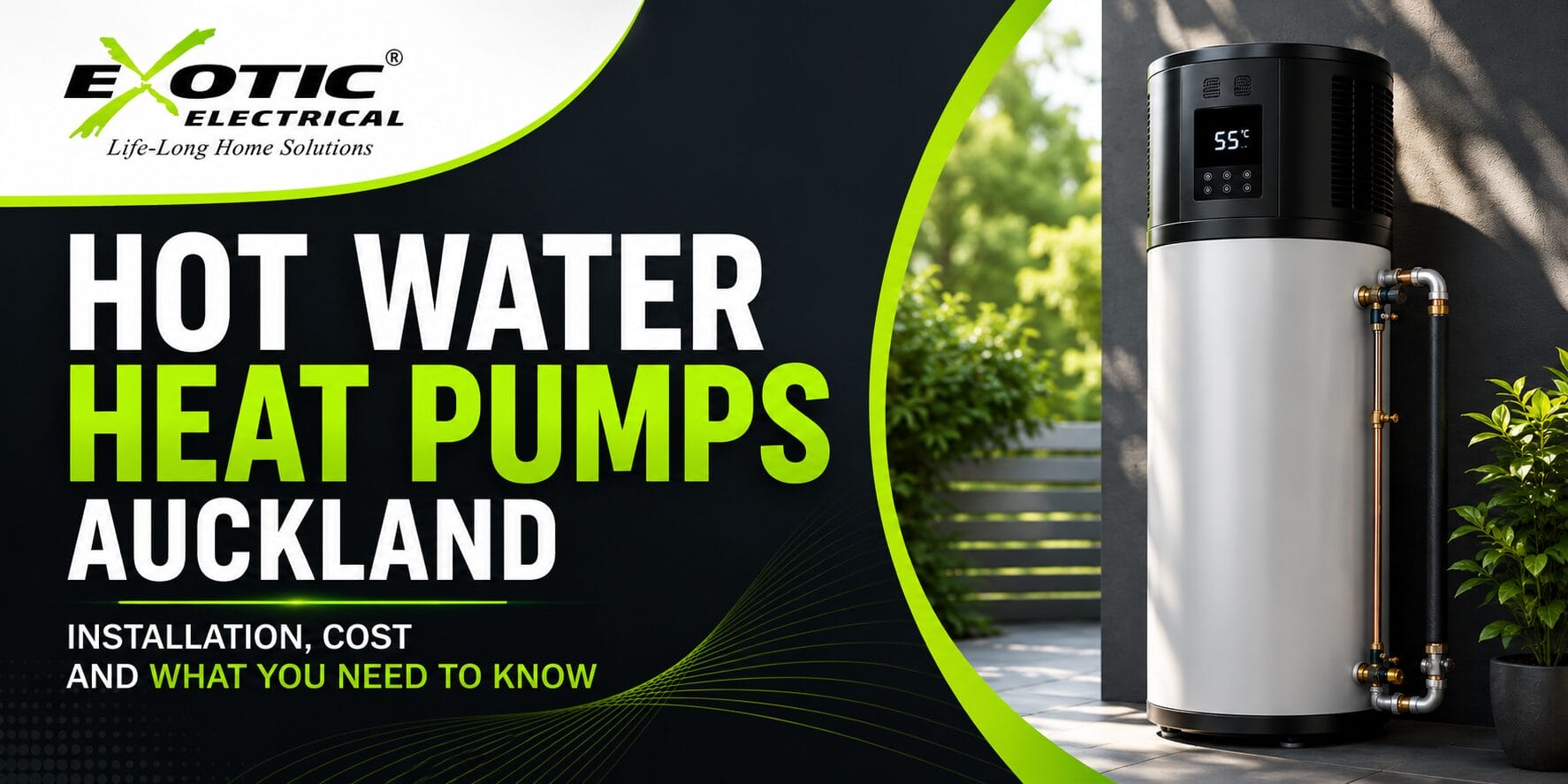
For most Auckland homes with a garage, utility room, or outdoor area with decent airflow, an integrated unit is the right fit. The cylinder and heat pump arrive as one piece, installation is simpler, and the cost is lower. Typical dimensions are around 450 to 500mm in diameter and 1.7 to 2 metres tall. You need clearance around the unit and airflow through the space.
Split systems suit apartments, small laundries, or any situation where the cylinder has to live indoors and there is no room for the full integrated unit. The heat pump head unit mounts outside, the cylinder stays inside, and the two are connected by refrigerant lines. More components, more installation complexity, higher cost, but the right answer when space is the constraint.
If the installation is a straight swap for an old electric cylinder in a garage or utility space, an integrated unit will cover it. If the situation is more complex, talk through both options before committing.
Why Who Does the Installation Matters
Hot water heat pump installation is prescribed electrical work under New Zealand law. That means an EWRB-registered electrician must carry it out. The circuit wiring, electrical connection, and RCD protection all need to meet the NZ Electrical Code of Practice. A Certificate of Compliance gets issued when the job is done correctly.
Skipping that step has real consequences. Home insurance may not pay out for damage linked to unpermitted electrical work. Selling the property becomes complicated when compliance paperwork is missing. Getting a licensed installer to do the job cleanly from the start protects the work and the property.
At Exotic Electrical, every hot water heat pump installation is handled by EWRB-licensed electricians. Avi, the owner and a NZ Registered Electrical Inspector with 14 years in the trade, oversees each job. A Certificate of Compliance is issued as standard.
How Long Do These Systems Last?
A properly maintained hot water heat pump runs for 10 to 15 years without issue. Sanden units, with their CO2 refrigerant and simpler mechanical setup, often go longer. The main things that shorten lifespan are blocked air intakes, ignored minor faults, and skipping annual servicing.
Most brands warranty the cylinder and compressor components for five to ten years. Check the warranty terms before purchasing. Some manufacturers require installation by an accredited installer for the warranty to be valid. Confirm your installer meets that requirement before booking.
FAQs
1. Does a hot water heat pump still work in Auckland winter?
Yes. Most units operate without issue down to around 5 degrees Celsius. Auckland rarely sustains temperatures below that, so performance stays consistent year-round. Sanden units run in full heat pump mode down to minus 10 degrees.
2. How long does installation take?
A standard integrated unit swap in a garage or utility room is typically done in a single day. More complex installations may take longer, particularly if electrical work on the switchboard is also needed.
3. Can I keep my existing cylinder?
Usually not. Hot water heat pumps come with their own insulated storage cylinder. In some split system setups, the heat pump can connect to a compatible existing cylinder, but that depends on the spec of what you already have.
4. Is there anything to manage day-to-day?
No. The system runs on its own. Some units let you set a timer to run during off-peak electricity hours, which cuts running costs further. Beyond that, an annual service check is all it needs.
Exotic Electrical installs and services hot water heat pumps across Auckland. EWRB-licensed electricians, Certificate of Compliance on every job, free written quotes before we start.
Call us or send a message to arrange a site visit.